Mix Archives
Table of Contents
- I Bet, I Bet, I Bet I Do, July 28, 2025
- Defiant Joy, November 24, 2024
- Antidotes: For When We Are Time Zones & Oceans Apart, July 8, 2024
- It Is You I Will Miss, Vol. 1: Umbra, Penumbra, Antumbra, December 1, 2023
- It Is You I Will Miss, Vol. 2: It’s 5pm On Sunday, No One Knows We’re Dancing, December 1, 2023
- Black Swans, Vol. 1: What the Black Swans Tells Us, March 12, 2023
- Black Swans, Vol. 2: I Sleep Under the Black Swan, March 12, 2023
- Salt and the Liquid Swells Set in Motion By the Moon, January 29, 2023
- Where We Live Now, November 14, 2022
- In the Dream I Don’t Tell Anyone, August 22, 2022
- I Have A Heart That Does Not Die, Vol. 1, April 17, 2022
- I Have A Heart That Does Not Die, Vol. 2, April 11, 2022
- Small Corners, March 20, 2022
- Something In the Water, January 2, 2022
- Sometimes It Takes Darkness, April 25, 2021
- What Will I Do Now With My Hands, April 25, 2021
- Our Fortunes Together, March 10, 2021
- We Are Hope Despite the Times, February 17, 2021
- Maybe I’ve Been Getting You Wrong (Cover Me With Questions), February 17, 2021
- Fictional Road Trips With You: An Imaginary Painting for a Newer, Better Year, December 29, 2020
- Every Time We Kissed, There Was Another Apple to Slice Into Pieces, December 17, 2020
- The Inmost Dancing, Vol. 1, November 25, 2020
- The Inmost Dancing, Vol. 2, November 25, 2020
- Messages in the Music, Music in the Messages, November 17, 2020
- In the Very Short Sound, There is More Love, November 1, 2020
- All A Song Wants, October 18, 2020
- Shelter Me From All I Am, October 19, 2020
- If This Had Been an Actual Emergency, September 17, 2020
- We Are Weather: Ventricular Meteor Showers, Vol. 1, August 13, 2020
- We Are Weather: Cloud Canopies, Vol. 2, August 13, 2020
- Whispering with You in the Early Hours: Maybe It’s the Weather, Vol. 1, July 23, 2020
- Whispering with You in the Early Hours: On & On & On, Vol. 2, July 23, 2020
- Sea-Change, June 24, 2020
- Let the Rain Come Down, May 28, 2020
- Can It Be a Comfort Between Us, Vol. 1, May 15, 2020
- Can It Be a Comfort Between Us, Vol. 2, May 15, 2020
- Whatever Waiting Means in This New Place, Vol. 2, April 23, 2020
- Whatever Waiting Means in This New Place, Vol. 1, April 23, 2020
- Because Desire Is Full of Endless Distances, April 18, 2020
- Surely Spring Has Been Returned, April 5, 2020
- In the Wild Wind, April 5, 2020
- Revision, Vol. 2, August 2019
- Revision, Vol. 1, August 2019
July 28, 2025. I Bet, I Bet, I Bet I Do.

November 7, 2025
I’ve had this playlist ready to share since July. Then I realized I had no words to go with it.
The two sentences above were written two or three weeks ago, and then I came to another standstill. A void. Language is always the attempt to give shape to and seek meaning in things witnessed and felt and experienced in wordlessness—making sense of the jumbled stimuli of life is its purpose, for me anyway. The search for words, any at all if the right ones don’t emerge right away, is the vocation of any writer. That said, it’s rare for me to be totally mute, for even the conversation with most private myself to remain blank white noise for so long. Life itself has snowed me for months, my system shocked into silence. Short of pasting the shrug emoji in as a placeholder for my thoughts and feelings, I had nothing I could share with anyone. I don’t feel any differently now, as I type this paragraph, but it seems the only way out of my deep freeze is to grope in the darkness, to lift my feet in the air despite the cement blocks weighing them down, and conjure words to describe a prolonged state of wordlessness. I am blind and tripping over the furniture of myself. What follows below is me flailing in panic, in frustration, in weariness, to find the familiar doorjamb, the desk chair, that becomes my anchoring compass for navigating my own life:
The songs gathered here were pulled together amidst wordless waves of contradictory feelings, day after day. Indescribable joy at witnessing small, everyday beauty and kindness. Gratitude for the love I have been blessed with from so many quarters, some of them unexpected. Paralytic terror that every measure of stability and safety I have worked all my life for has been swept away for good. Magma rage at the tide of injustices and disappointments, some collective, some personal, that have rolled up to the shoreline this past year.
If I could scan my interior state like a meteorologist, the radar of my insides might look a lot of the weather we have experienced the last seven months. The wet chill of early spring that hovered and clung to us until June, at which point it shape-shifted into a steaming, sopping-wet towel, heavy and sagging over the shoulders of the summer we had hoped for. The stunning if confusing autumn that’s given us temperature spans of 30 to 40 degrees between sunrise and sunset. The radar map of my emotional forecast tells me I should be prepared for irrepressible peals of laughter and choked sob flashes—often at the same time. I imagine the ghost of Walt Whitman waking me each morning and handing me a pair of sunglasses, a bikini, and a hooded, rain poncho. His whisper in my ear, “I know. It’s a weird outfit. You contain multitudes. Dress accordingly.”
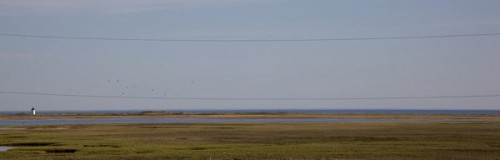
Very little, as it turns out, can be deemed a certainty. Even from 35,000 feet up in the air. Does the May photo I took above from a plane flying over the Atlantic, bound for New York City, depict a sunset on a calm horizon? Or is it a snapshot of a volatile squall moving in from the south? Both. Neither. Objects may have shifted during flight and may be closer or farther than they appear.
That change is the only constant in life isn’t a new, original idea. It’s the reality we live and re-encounter every day. But tell that to our bodies and our senses. We might scoff now at the ignorance of generations of humans who insisted the earth was the fixed center of the universe. Yet everything they saw and felt told them otherwise: The planet under their feet was stationery and immutable, and the celestial bodies were moving in sweeping arcs in the sky above them. We cannot trust what our senses tell us. Even now, with the benefit of twentieth-century scientific knowledge, I forget that the flickering stars I see on black, cloudless nights are long dead—because my limited sight tells me they’re still sparkling away.
A famous adage that’s attributed to Mark Twain says, “If you don’t like the weather in New England, just wait five minutes.” Further research reveals that aphorism isn’t quite what Twain said or wrote. As it turns out, Twain was wittier, more caustic, and more reverential about New England’s weather than the bumper sticker folks credit him with today. Case in point: “There is a sumptuous variety about the New England weather that compels the stranger’s admiration—and regret. The weather is always doing something there; always attending strictly to business; always getting up new designs and trying them on the people to see how they will go. But it gets through more business in spring than in any other season. In the spring I have counted one hundred and thirty-six different kinds of weather inside of four-and-twenty hours.” (For the geeks and avid bibliophiles among you, I recommend reading the full speech, “The Oldest Inhabitant: The Weather of New England.” Despite the fact that I quoted Twain in my high school yearbook entry as a senior, I had forgotten how laugh-out-loud funny he is, with tingling slaps of sarcasm every few lines.)
What the pithy aphorism gets right and also oversimplifies: The confusion, volatility, and beauty that characterizes so much of life all flow from the same source, and the tempest experience of that living cannot be organized or contained in discrete Bento box compartments.
Even my words cannot fathom much less keep up with the whirl of weather going on, inside or outside me. The language rushes through my fingers. The downpour, the deluge is resplendent. Exciting. Terrifying. Exhausting. Breathtaking.
Take a breath, Mika.
Wait five minutes. Wait five minutes. Wait. Five. Minutes.
The world is spinning forward, even if I can’t see or feel it. Turning on its own axis. Orbiting around the sun. We are planets on a planet. We should be dizzy from this cosmic pirouetting.
The lightning storms outside me are so beguiling to behold, in their pomp and pageantry, it takes what feels like an eternity before it occurs to me: The constancy of change applies to me, too. Even if I can’t see it or feel it.
The weather inside each of us is changing even now.
The icehouse of my heart, tomorrow, might be a springtime lake. Like the magical lake of my college years that we skinny dipped in after midnight each May, when our silhouettes made us forget our vulnerability to the inevitable, metallic bite of pain. The day after tomorrow, the placid lake of me might quiver with anticipation. I might hum and sing to myself until my pooled body of water loosens its form, vibrates into droplets, disperses in every direction into mist, into fog, into steam, into the air itself.
Wait five minutes. Who knows who you or I will be?

I Bet, I Bet, I Bet I Do*
Created May 7, 2025–Jul. 28, 2025; posted Jul. 28, 2025
* This title is lifted from the lyrics to “Wreck” by Neko Case, which appears on the mix as the ninth track.


November 16, 2024.
In an era of deepening systemic cruelty and identity-based persecutions targeting more than half the population and pointed injustices by power strucutres that thrive on our misery, despondency, and complacency, living with open and unapologetic intentional kindness and empathy and with defiant, insistent joy in the ordinary are extraordiary, revolutionary acts.
Defiant Joy
Created Oct. 5, 2024–Nov. 16, 2024; posted Nov. 16, 2024


July 8, 2024. Antidotes: For When We Are Time Zones & Oceans Apart.*
* For those who want to jump over the word-slinging musings and skip ahead to the music playlist, here’s the magic link.
I want to believe in the ways the arc of the universe should bend.
Morally.
Emotionally.
That longing doesn’t mean I believe in things being fated or predetermined in some already written omnipotent book of fortunes. I don’t. I believe in free will, in choices, and in human agency.
I believe the moral universe bends, ever so slowly, through generations of intentional work. Every bend is hard won and is not a fixed destination but another step in the long arc’s journey.
We don’t seem to be bending toward justice or anything resembling it at present. I don’t have to list the reasons why. One need only wake up to NPR or scan the headlines and news tickers for 30 seconds.
We have a lot of work and many long fights ahead, with everything I hold dear, the very survival of who and what I love, at stake.
That desired arc of the moral universe is earned, which is to say that every movement takes tremendous, collective effort.
That said, I feel clear at this point in my life about that journey toward justice being a lifelong, even multi-generational proposition.
I have far less of an understanding of how the arc of the emotional universe works.
I want to believe the arc of the emotional universe, like that of the moral universe, is long, but it bends towards connection.
Some people we love and who love us are active parts of our daily existence for a full lifespan.
Others are in our experiential orbits for such brief durations and then depart, sometimes with the fanfare of comets and shooting stars, sometimes with the quiet of stones skipping on the water’s surface before descending to what lies beneath. Yet the impact some of those people have ripples on, inside us, every day as though they are still with us.
That those we lose to death remain with us and continue to shape who we are and how we move in the world through the memories and feelings that our hearts carry in their absence makes sense to me.
As I get older, however, I find I’m more perplexed, sometimes astonished, by the comings and goings of the living through our lives, and the seismic effects of those arrivals and departures.
I used to believe the amount of time spent together with those we love—when two people are connected and in sync with one another on their life travels—and that, correspondingly, the length of a time lapse between two people without direct contact and/or without mutual understanding mattered more than the feelings and experiences that relationship, whatever its duration, produced while it was active.
Don’t mistake me. Duration matters. Intentionality matters. Making the time and space every day for those we love and care for and about matters. Showing up matters.
My marriage, for example, like many, is built on love for sure. It began as love of the lightning bolt variety. But its nature and meaning are also transformed and deepened by its longevity, all the days together since that lightning storm. Over 26 years, 1 month, 14 days, and counting—good and bad years, months, days, hours, and everything in between. That means we are both lucky and tenacious enough not to take good fortune for granted.
I am also lucky enough to have a number of platonic friendships spanning decades of constancy that have a similar cadence, breadth, and depth to them.
What I’m contemplating here is something else: the endurability of love and loyalty in the face of boundless distance and absence, whether by intent, neglect, or bad fortune.
Perhaps this sounds like some woo-woo bullshit. And perhaps that is what it is.
After more than half a century of life, similar to something a fictional character I created once mused, I have grown used to disappearances, however heart-rending and devastating. I remain surprised by renewal, rejuvenation, and return.
Even so, as I reflect on the arc of my relationship arrivals and departures in recent years, and in particular recent months, I find that time and distance has far less bearing on the capacity for abiding fellowship and boundless love, new or old, than I thought.
An hour, an afternoon, a weekend can kindle or reignite affection enough to last for years of geographic distance.
With sufficient cultivation of trust and candor, there’s enough food and sunshine enough to sustain years-long friendships of people who haven’t ever met in person.
How these momentous occurrences can come and disperse like a drop of rain water in an ocean and yet be as meaningful and transformative as a volcanic eruption remains a mystery to me.
Some notable examples from my own life, in no particular order:
When my partner and I got legally married in 2010, I was in touch with so few people from my college years, only two classmates were invited to my wedding, neither from my graduating class. Flash-forward 10 years, and that college friendship ratio has shifted dramatically. The last decade ushered in unexpected connections that reshaped the landscape of my adult relationships. Several are deep friendships renewed after years, and even decades, of dormancy. Just as many are new, emerging adult connections with people I wasn’t friends with at all when we were students. None of these people live in New York City, and most don’t live on the East Coast. None of these geographical realities seems to have any affect on their emotional resonance and significance.
In 2003, my biological father had a stroke that put him in the ICU. Our relationship was erratic and volatile, so much so that we had minimal contact between August 1991 and that medical emergency 12 years later. Pop was the reason my phone number was unlisted. Having no access to and therefore no relationship with my much younger sister—my half-sister from my father’s second marriage—was one of many sacrifices resulting from my decision to sever ties with Pop. Her absence from my life was collateral damage, a loss I was certain was irrevocable. When I went to visit Pop in the hospital after his stroke, I assumed being with him again would be the most significant experience of the day. In retrospect, an equally pivotal moment was a brief one that seemed merely strange and startling at the time. My partner and I were standing in the waiting room, I think while I got my bearings together to sit with my father, and a dirty blonde, blue-eyed teenager in cutoffs walked in, caught my eye, and said, “I think you might be my sister.” I don’t think I’ve ever been so simultaneously elated and saddened to hear such an odd sentence. That moment started Zoe and I on a path to a sister bond I never believed I’d be able to have. Bridging the distance took years; the connection was glacially slow, and the time we spent together was spotty for a long time for many reasons. A sixteen-year age difference, her still living in our father’s house, and then even after she was grown and out of college, the volumes about one another that remained unshared and unspoken. But we had meals together and got to know one another. Very gradually. I can’t quite clock the moment when I realized we were real sisters, adults, and friends. Perhaps it was in early 2016, when Zoe invited me to her 28th birthday party and I actually went. For me, though, the miracle among miracles surfaced during the pandemic of all things. Our father died in late 2020, which ushered in more frequent contact, shared grief, deepening understanding and love. Zoe and I spoke a lot during lockdown, so when one of those summer sweet spots in pandemic ebbs and flows allowed for some safe, judicious contact, she came to visit me for a weekend. It wasn’t until we’d been hanging out for two of the three days that I understood this weekend together was a marvel, a lifelong dream-wish I had carried starting when Zoe was born and that was made real in late July 2021. A sisters’ sleepover 33 years in the making. Zoe is 36 now, and I’m 51. We’re sisters and friends. The wonder of the reality has long since surpassed even my most imaginative fantasies.
I could never have conceived I’d build authentic friendships on Zoom with people who I didn’t lay eyes on for years. I meditated nearly weekly with a small group of those dear souls for three years before meeting any of them in person. Somehow, they have learned to know my heart as well as people who have known me for decades. In the case of one virtual friend in North Carolina, I still have yet to see proof with my own eyes that she’s got a full body, not just a head and shoulders trapped in a pixelated Brady Bunch rectangle. Despite the absence of tangible evidence of her non-virtual self, I trust her with my innermost wants and darknesses, things that perhaps half a dozen other people on the planet know—and the trust between us runs both ways.
A dear friend who I met 26 years ago in graduate school has lived across oceans and seas for well over a decade. It’s been at least that long since I’ve seen her in person. We stay in touch through The Technology, such as it is—email, DMing, social media exchanges. It’s an intermittent friendship, but a deep and long-running one, full of affection and shared understanding. We’re both writers, so we use our words. Perhaps sick of typing, the other day, she left me an audio memo instead of a written missive. I hadn’t heard her voice in years. What amazed me was how herself she sounded, how unhesitating my recognition was, and how equally instantaneous and complete the wave of affection that cascaded over me was.
I went to my college reunion a few weeks ago, the last decade having somehow transformed me from a person who never attends reunions into one of the peculiar people who helps plan them. I spent three days accumulating a treasure trove of joyous memory gems. Pure delight. Glee of the unabashed kind that I recognize in young children, a state of being that was elusive for me as a little girl. I learned to play pickle ball, taught by a dear friend, one of those new adult friendships I mentioned, who I kept at arm’s length all through college. I received the gift of quality time with one of my nearest and dearest, a friend who was one of my best friends when we graduated and who came back into my life in 2019 after two decades of absence, a fair amount of that lapse in near-silence. I reunited for the first time with one of my closest friends from the first two years of college, who I had not seen since 1994. On and off all weekend, I took unfettered pleasure in the improbable presence of a classmate whose guarded and chilly demeanor when we were in school together was so fierce and impenetrable, she scared the crap of me and almost everyone else I knew; she, too, was one of those people who never attends reunions, and yet after 30 years, here she was, warm, awkward, funny, vulnerable.
A few days after returning home from reunion, I spent another unusual evening with someone who, when we were 19, was so close to me, it felt more like family than friendship. We had enough misunderstandings and disappointments and grievances unfurl between us that we were distant and then estranged for a long time. We repaired that damage as best we could years ago now, and the healing of those wounds was already a confounding adulthood gift. That said, I never expected to spend any shared, one-on-one time together, ever again. Even after we made a dinner date, I assumed it would be a few hours of pleasant, light-touch exchanges. Instead, we ate and drank and talked late into the night, and it became the longest, most intimate time we’ve shared together in nearly 30 years.
I’m someone for whom work is a major wellspring of friendship. With every workplace I left, my greatest gifts were the ongoing relationships I took with me, a lifetime’s worth of work husbands and wives. That was true for decades, until it wasn’t. My garden of work friendships went fallow for a number of years, for a host of reasons. The last year has brought several resplendent and unexpected blooms, humans whose wildflower hearts and enchanting company I treasure, irrespective of our collaborations in professional life. It was as though I awoke after seasons of drought, arctic cold snaps, and tempest deluges, and my life was tranquil and abundant again, the twilight aglow with lit-up fireflies blinking in the darkness and my spirit carefree and drunk with the lush color and heady perfume of newly opening blossoms.
For about a year, I’ve had an intermittent written and virtual correspondence with a collage artist who lives in the South. The exchanges are short and sporadic, and yet also as earnest and full of promise as any friendships I’ve had. We’ve never met. Last week, I came home from work to find an envelope from an unknown address. In it was a gift of two cyanotypes, with a brief handwritten note from the collage artist that was full of easy warmth and kindness and humor. I don’t yet know if the connection is fleeting. It seems too soon to even know if it’s more than a passing acquaintance. I know only that I’m moved in some imperceptible way that leaves me forever changed, for the better.
Who knows what becomes the bud of a friendship that springs eternal?
Who can say when or why someone else’s orbit spirals back into our own after decades of time zones and oceans apart?
Why this person and not that one? Why this moment and not 20 years ago?
Why did you appear and why did we part ways and why have we been returned to one another after so long?
Why why why to it all.
There’s no question about this: Life is change. Everything and everyone is temporary. Some people are with us for a short while, and once we take leave of one another, we don’t encounter them again. But I’m learning not to be certain. Not about who in the present may seem inconsequential or ephemeral but may become as essential to me as the air I breathe. Not about who from the past is gone forever. These last years have demonstrated to me again and again: We cannot know when and where new and enduring love and loyalty may take root. We also cannot be sure who may return to the current of our lives after years of wanderings in other foreign seas and lands, like apparitions straight out of a battered paperback copy of Homer.
Perhaps the key is to embrace the mystery and uncertainty, and if we’re lucky, to live long enough—cultivating enough patience, awareness, acceptance, compassion, open-heartedness, and gratitude along the way—for that emotional arc to bend, for new constellations of amity to form and light up our nights, for the orbital paths of those for whom we still harbor love, the time zones and oceans and heartbreaks apart be damned, to blaze forward on great wheels and return to us, joining our own trajectories again.
To those whose loving orbits have traveled with mine for a gladful eternity, thank you for yesterday, for today and tonight, and for tomorrow. You, the sunrises and sunsets, the ocean tides, and the stars forming and showering over our heads each night are my reasons for being.
To those of you who newly and currently grace me with your affection and solidarity and tenderness and laughter, I love you, and I am beyond grateful for your generous company.
To those of you who I have not seen since we spun away from each other so long ago and may not see again for many more revolutions around the sun, of course I still think of you, cherish you and all you still are to me, with love and wonderment and sometimes longing. The static of the satellites, the dead zones, the missed and misunderstood signals from distant lighthouses, they have no bearing in these chambers. Of course. Still. How could I not?
Tomorrow is too far afield to know what the future occasions may bring us. In the meantime, let us work with the scene we’ve been given, and let the music be a comfort between us all, even as we wait for the world to spin forward and for the great new work to begin.

Antidotes: For When We Are Time Zones & Oceans Apart*
Created Dec. 1, 2023–Jun. 25, 2024; posted Jun. 26, 2024
* The mix subtitle comes from a line of Paul Simon’s 1993 song “Thelma.”
December 1, 2023. It Is You I Will Miss (Volumes 1 & 2)
It Is You I Will Miss is very much a winter mix. As with winter itself perhaps, once you’re in the thick of it, you’d never guess where you are now had its foundational roots in spring’s promising renewals and in the fierce, technicolor lushness of early summer. Of the first dozen songs I started with back in April, nearly all of them made it onto these final incarnations of It Is You I Will Miss. One of those songs was “Private Dancer,” a 1984 Tina Turner hit from the eponymous album that I grew up on, which was considered her post-divorce, post-Ike Turner Revue comeback. Tina Turner’s passing would not occur for another month and a half. In the aftermath of her death, I momentarily considered dropping “Private Dancer” from the mix list because I didn’t want its inclusion to feel like some overdetermined, cheesy homage. Or rather, I didn’t want it to feel like I was giving Tina Turner a nod only because she died. Then I decided I was overthinking, per usual: Tina Turner deserves to be given countless nods of gratitude for all the gifts she provided us with for so many decades—both as a tremendous musician and performer and as a human being. So “Private Dancer,” which remains a great song, stayed.

It’s been a busy year. The rest of the mix took much longer than expected. I had a growing list of song possibilities in a notes document in my phone, but not the time to put the thing together in an online player and blog post and make some curation and sequencing decisions.
In the intervening eight months since I jotted those first It Is You I Will Miss notes, a lot has happened.
Some of what’s transpired is the heightening losses that come with the territory of being alive and middle-aged. Once you pass the 40-year mark, the pendulum of life milestones tends to shift increasingly from invites to birthdays, weddings, and baby showers to hospital visits, funerals, and memorials, sometimes dramatically. Death comes for us all, but it used to be at least one or two generations older and felt farther away. Now it’s showing up more often among my contemporaries, my friends, my peers. I know that who get sicks, lives, and dies; when; and how isn’t determined based on fairness or goodness or justice. Even so, the news in late July that Sinéad O’Connor had left this mortal plane at age 56 hit hard. Some of it was the loss of such a tremendous talent. But for anyone who came of age in the 1980s, the loss was and remains more than that. O’Connor took the music world by storm in 1987 when I was not quite 15. In the decade that followed, she continued to make her music and her activist views known with such ferocity and bravery and rage and gender-bending punk coolness that I don’t think my peers and I clocked at the time that she was only six years older than us. Realizing that my childhood friend Julie’s older sister Jenny was only a year younger than O’Connor really brought this home for me.
Not everyone makes it. Sometimes we lose those who are relatively young. People my age have known that since our own youth. We grew up with the escalating Reagan-era arms race and looming threat of Cold War nuclear holocaust on the nightly news. We also moved through our entire sexual coming of age in the shadow of the most fatal years of the AIDS epidemic. And yet my partner and I make that obvious observation—not everyone makes it—to one another more and more now. As if now that we’re traversing the middle decades of life, we need to remind one another that we aren’t immune.
Even without stark reminders of mortality, my own awareness that my own time on and in this cosmic journey is not infinite grows a little more acute each day. Encroaching menopause and the signs of wear and tear on a body with over a half-century’s active and occasionally foolhardy or reckless use shows up now, in all of my daily senses and sensations.
Maybe because of those tiny changes and nuances in my body, I can feel my perspective on my own life and the world around me changing. It’s as though the last year has ushered in what I imagine will be a process of bringing all that’s come before into focus.
I can’t say I’m thrilled with the anatomical slowing down or physical constraints that are part and parcel of aging, such as they are. However, what I will say in favor of having reached this particular life mesa is that my appreciation and gratitude for the facts and experience and even mysteries of my existence only deepens.
I’ll take all the roadside scenic overlooks on offer, thanks very much:
I have been with the same partner for more than half my life, and I love so much about the substantive, intimate shared existence we have built together over that time. I have now lived long enough to have a treasured and evolving adult relationship with my sister, who was inaccessible to me for so many years when she was growing up, so much so that it was hard for me to believe that might ever change. I work with some amazing, smart, and kind people in support of a worthwhile mission that attempts to makes the world a better, more equitable place; unlike at most of my past jobs, I feel more grounded than ever in my own awareness of who I am, what I do well, how I want to show up, and where my struggles and challengers are located and how they show up. In October, I went on a wellness weekend retreat with folks from a virtual weekly meditation group that I joined during the height of COVID lockdown. The meditation group had first formulated on Zoom, so I had only met two of these dear souls in person before. By the time the retreat took place, we’d been in deeply personal sessions together for nearly three years. One of the remarkable things about meeting them was that they were both old friends and new friends all at the same time the moment that we laid eyes on each other and leaned in for a hug.
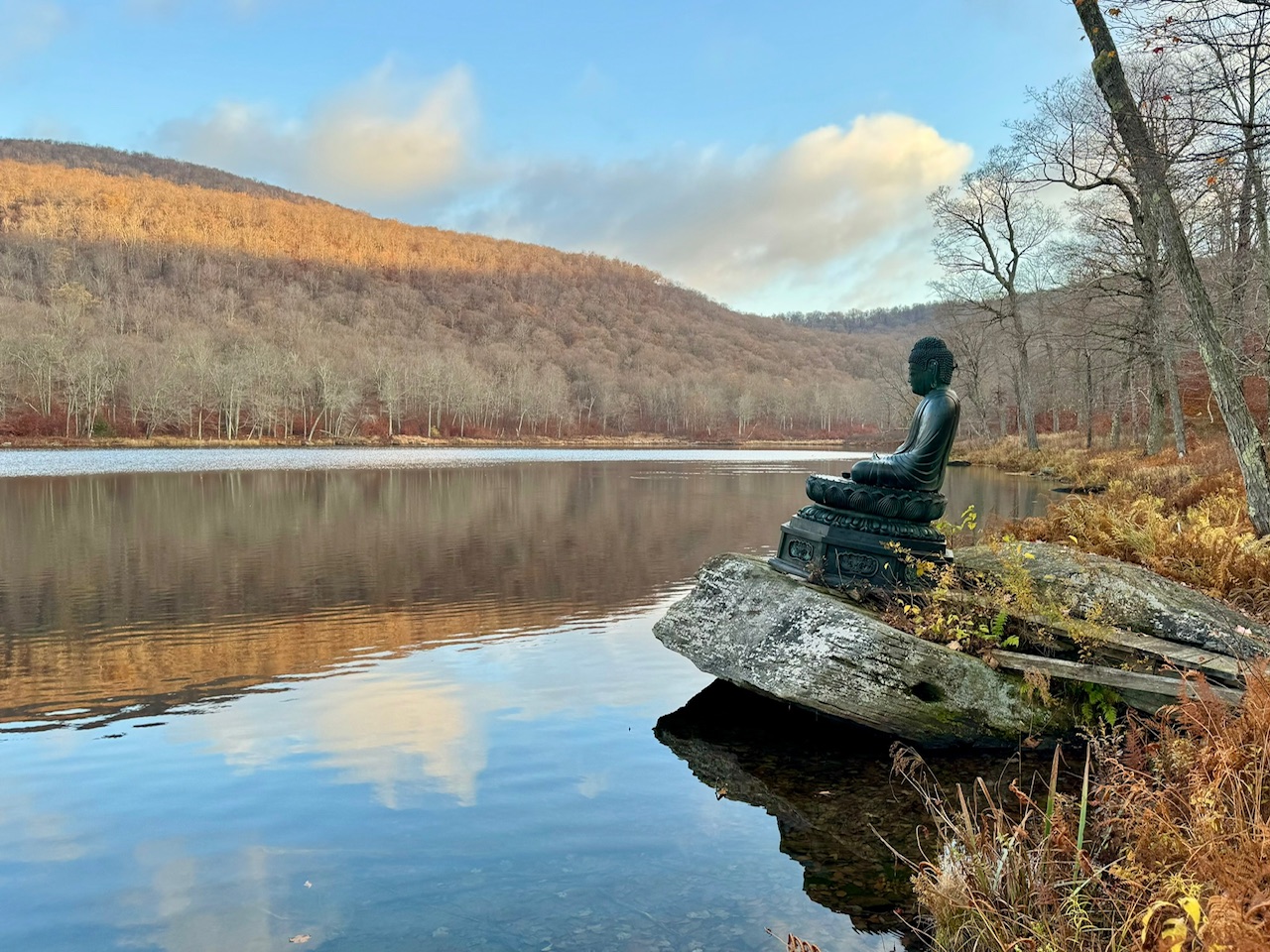
As I write this, it is late in the day on December 1, and I am coming off of another World AIDS Day, an annual day of commemoration for those we have lost to AIDS. The list of names I recited in my head and heart today is long. The people in whose remembrance I traverse the world every day, in order to honor the memory of the years they were here, as well as all the years they weren’t given to live, years that I have had to become and simply to be. When I realized I’d finally be finishing and releasing It Is You I Will Miss on World AIDS Day, I added one last track—“Being Boring,” a 1990 Pet Shop Boys song that remains among the most poignant reflections on the losses so many of us carry because of AIDS.
Tomorrow is my 51st birthday, and I plan to embrace whatever the day brings. Since January, Peter Gabriel has been releasing a new song on the full moon of every month; in his infinite wisdom, he decided to release the complete new album comprised of those songs, i/o, today, on December 1. Now that’s what I call a great present. Happy birthday to meeeeeee.
It Is You I Will Miss has had me reflecting on the old and the new:
- old songs I have known for so long that relistening to them was like a genuine exploration, a slow, intentional deepening process of rediscovery—hello again, “Can You Feel It?” by The Jackson 5, “(Wish I Could Fly Like) Superman” by The Kinks, “Let the Music Play” by Shannon, and “The Last Day of our Acquaintance” by Sinéad O’Connor;
- songs by artists I have long loved that were somehow new to me—a T. Rex song I didn’t know? What?;
- new songs and directions by artists I have followed, known, and loved for a long time—PJ Harvey, Peter Gabriel, Alison Goldfrapp, Everything But The Girl, Janelle Monáe;
- and songs by people I have never heard of until a few months or even a few days ago, some old and only new to me and some just plain new—thank you, Mahlathini and the Mahotella Queens, Arlo Parks, Pattie Gonia.
How much joy and beauty have I experienced so far in this life and yet with still more to discover and explore every day. As a dear mentor said to me recently:
How lucky am I, how lucky are we.
I’ve got a feeling this year’s for me and you.
How lucky indeed.

It Is You I Will Miss, Vol. 1:
Umbra, Penumbra, Antumbra*
Created April 17, 2023–Nov. 30, 2023; posted Dec. 1, 2023
* The mix title It Is You I Will Miss comes from a line of Louise Glück’s poem “Crossroads,“ from A Village Life (2009).

It Is You I Will Miss, Vol. 2:
It’s 5pm on Sunday, No One Knows We’re Dancing*
Created April 17, 2023–Nov. 30, 2023; posted Dec. 1, 2023
* The mix title It Is You I Will Miss comes from a line of Louise Glück’s poem “Crossroads,“ from A Village Life (2009). The Vol. 2 subtitle comes from the lyrics to track 19 on the mix, “No One Knows We’re Dancing,” by Everything But The Girl.

March 12, 2023. Black Swans: A Diptych.
As part of my job leading communications and marketing for a non-profit, I oversee its social media channels. To curtail how long I stare at screens and for my own wellness, I limit my personal time on social media more and more. I’ve also considered abandoning my presence on certain social media channels altogether. Still, occasionally, I discover something beautiful or illuminating.
Rebecca Solnit is a funny, intelligent, thought-provoking writer and activist, and has been for a long time, so learning something remarkable from her isn’t surprising. However, Twitter being the cultural wildfire that it is, finding my most recent Solnit insight via a February 24, 2023, Twitter thread was unexpected. My delight was amplified by the fact that the thread itself was about how we as humans deal with surprises—the good, the bad, or the just plain unanticipated.
Solnit observes that the term “black swan” refers to events that are rare and unexpected but have deep and impactful consequences. In many cases, these things may appear obvious in retrospect, but they come as a surprise when they happen. When I dug a little deeper into the history of this term’s symbolism, I read that its earliest usage in Western culture dates back to a second-century Latin expression written by the Roman poet Juvenal, which translated as follows: “a rare bird in the lands and very much like a black swan.” At the time Juvenal coined the phrase, the black swan was presumed to be an imaginary creature, a bird that didn’t exist. So “black swans” in language were symbolically about impossibility.
In the late 17th century, Dutch colonists exploring Western Australia came to be the first Europeans to see black swans, which were quite possible, as it turns out. At that point, the meaning of the term “black swan” transformed—from nonexistence to an assumed impossibility that later becomes disproven.
In both the recent Twitter thread and at greater length in a 2020 Lit Hub essay, “Rebecca Solnit on Black Swans, Slim Chances, and the 2020 Presidential Election,” Solnit is quick to point out that the world and life are full of black swans, some welcome and some unwelcome. But to focus solely on the type of black swan that appears is to miss the point. Solnit asserts, “What the black swans tell us is that our assumptions often blind us to the possibilities.”
I’ve often feared uncertainty in that consistency can feel safer. When the shit of life comes raining down, I want to know who I can rely on to show up for me. Solnit’s point is that we would do well to avoid conflating improbability with impossibility. I would also contend that while it’s silly and reductive to romanticize all change as positive—some change ushers in and makes room for new growth, and some change is an earthquake that reduces everything, including our homes, to rubble—it’s also shortsighted to mistake familiarity for safety. If I reflect on the happenings of my life with an impartial eye, especially the most significant ones, predictability is no more a guarantee of security than anything else. We also know that life is change, as inevitable as a daily sunrise and sunset. To be alive is to fly amist flocks of black swans. Most change ruffles the feathers of our emotional selves, even when it later turns out to be a precursor to the greatest richnesses that life offers. What unsettles us today when it’s new and unexpected can turn out to be a harbinger of personal growth, renewal, and even protection. We don’t and won’t know its fuller nature and meaning until we embrace and surrender to the unpredictability and live it out.
As Solnit says, that, for me, too, is hopeful.
Black Swans, Vol. 1: What the Black Swans Tell Us*
Created Feb. 18, 2023–Mar. 12, 2023; posted Mar. 12, 2023
* The Vol. 1 mix title What the Black Swans Tell Us was lifted from and inspired by a Twitter thread by the wise and brilliant writer and journalist Rebecca Solnit.

Laguna Bacalar, Mexico, February 13, 2023.
Black Swans, Vol. 2: I Sleep Under the Black Swan*
Created Feb. 18, 2023–Mar. 12, 2023; posted Mar. 12, 2023
* The Vol. 2 mix title I Sleep Under the Black Swan was inspired by a Twitter thread by the wise and brilliant writer and journalist Rebecca Solnit.

Black Swan, Selena Perez of Creativity Explored.
January 29, 2023. New Flavor.
Nearly three years have passed since the pandemic began. Time feels as elastic as ever to me, perhaps more so. Crawling. Then racing. Sometimes both at once. One minute, I was marking my 50th birthday in early December and sharing some good meals over the holidays. Then I blinked and it was late January on the calendar.
A number of perpetual questions arise whenever the ticking of the clock seems to recede into meaninglessness:
Is it cumulative effects of pandemic life?
Middle age?
Perimenopause?
Insomnia? Sociopolitical PTSD? Winter seasonal moodiness? Stress? Grief?
It’s all of the above, of course. The proportions shift, but the same factors remain play.
As distinct as the different pandemic phases and years have been—especially in NYC, where geography, dense population, and a dependence on public transportation have made us something of an ever-morphing COVID petri dish—I find myself starting to merge and conflate what occurred in what season, especially the last two. Was the St. Vincent concert last October or this past one? Did I really get my first COVID vaccine over a year and a half ago? Right before Christmas, I saw my closest friend since childhood for the first time since lockdown began, and we couldn’t for the life of us figure out when our last time together had been. I was told recently that subway ridership remains at a mere 50%, even in this “hybrid” phase we’ve been in these last 9 to 12 months. I’m commuting two or three days a week, and the 50% stat feels about right based on my own train trips.
Day-to-day New York life right now gives off a surface air of familiarity and routine that harkens back to parts of pre-COVID life. But one need look no farther than my partner’s now-permanent home office, the number of Zoom meetings on my calendar, the sparse subway platforms even at rush hour, or the constant waves of restaurant closures—and the shortening and, by and large, less adventurous menus at the ones trying to do whatever they must to stay afloat (a widespread phenomenon across the food industry)—to know that urban life, and likely life everywhere, will be altered for an even longer haul.
One thing that remains a constant for me: The volume on life’s experiences, whatever they may be, is cranked higher across the entire emotional spectrum. Its flavors are more concentrated. That bouillon-cube life intensity can have an exhausting, cumulative effect, but it also means that my life-cup of gratitude for the pleasures of being alive, even down to small, mundane ordinary details, is brimming:
The grinding of coffee and the simple steps to brew a new pot in the French press.
The two cardinals who we call Mr. and Mrs. Bobby that come visit our living room window every morning.
The hrrrmmming sounds our dog Kina makes between naps and snuggles, and what each of them mean.
The stones I pick up on my pier walks—and which ones I keep and which I give back to the ocean. The sea-glass bits I find along the way.
The handful of trips I’ve made, the friends I’ve gotten to hug again, the desert and mountain hikes we’ve shared.
The live music I have been lucky enough to see and hear and bask in over the last 16 months.
The incredible artists whose work I’ve been discovering.
In one of Matt Groening’s 1980s Life In Hell comic strips, which used to appear in the long-defunct NYC newsweekly The Village Voice, a depressed character is questioning to a friend what the point of life is. The punch line is in the final frame: The friend hands the depressed guy an ice cream cone, who says, after he takes his first lick, “Hm. New flavor.”
Even these past three years, perhaps especially these past three years, I have seen, heard, tasted, touched, and inhaled many new life flavors and deepened my sense of joy and gratitude for the familiar tastes I have always loved. I didn’t think it was possible to love the smell of the ocean or the vibrant texture of perfectly carbonated seltzer more than I did. But it is.
Salt and the Liquid Swells Set in Motion By the Moon is an amalgamation of old and new flavors. The mix started in mid-November as a written list that I misplaced. I reconstructed the list from memory two months later, expanding it as winter set in and seasonal moods shifted. The mix title comes from a poet I’ve known since my MFA grad-school days in the late 1990s but from a poem I found for the first time this weekend. The opening track, “This Is the House,” is from the first Eurythmics album, released in 1982; I’ve had that LP on vinyl for nearly 40 years, and songs from it, including “This Is the House” have appeared on my early cassette mixes from the 1980s and early 1990s. The Elton John song is part of the soundtrack to my early childhood. Tedeschi Trucks Band was a gift that came my way right before lockdown; the live track that appears here is a cover from a show I was lucky enough to attend, the last performance in a week-long October residency at The Beacon. Two songs are new-ish tracks by talented musician friends. Songs by Health and Jimmy Reed were shared with me by my partner and a college friend with excellent taste. (I’m retroactively bummed we never had a radio show on KRLX together!) Sunflower Bean, Wet Leg, Broken Bells, and Phosphorescent were lifted from fabulous mixes made by friends. And until yesterday when I stopped to chat with Don, the Brooklyn neighborhood record seller I’ve bought music from since moving here in May 2000, I thought I had heard every song Sam Cooke had recorded; “You’re Always On My Mind” proved me wrong. The art images below are by a painter whose work has been a pandemic discovery and delight for me and a classic sculpture by Rodin that I love so much, I’ve been visiting it nearly every time I go to the Met for over 35 years.
New flavor.
May the sweet, salty, sour, bitter, and umami of the music elicit your delight and your dancing, bringing you to laughter and tears and then back again.

Salt and the Liquid Swells Set in Motion By the Moon*
Created Nov. 14, 2022–Jan. 29, 2023; posted Jan. 29, 2023
* The mix title was lifted from Dorianne Laux’s 2007 poem “Kissing Again,” which appears in its entirety below the playlist.
Kissing Again
By Dorianne Laux
Kissing again, after a long drought of
not kissing—too many kids, bills, windows
needing repair. Sex, yes, though squeezed in
between the minor depths of anger, despair—
standing up amid the laundry
or fumbling onto the strip of rug between
the coffee table and the couch. Quick, furtive,
like birds. A dance on the wing, but no time
for kissing, the luxuriant tonguing of another
spongy tongue, the deft flicking and feral sucking,
that prolonged lapping that makes a smooth stone
of the brain. To be lost in it, your body tumbled
in sea waves, no up or down, just salt
and the liquid swells set in motion
by the moon, by a tremor in Istanbul, the waft
of a moth wing before it plows into a halo of light.
Praise the deep lustrous kiss that lasts minutes,
blossoms into what feels like days, fields of tulips
glossy with dew, low purple clouds piling in
beneath the distant arch of a bridge. One
after another they storm your lips, each kiss
a caress, autonomous and alive, spilling
into each other, streams into creeks into rivers
that grunt and break upon the gorge. Let the tongue,
in its wisdom, release its stores, let the mouth,
tired of talking, relax into its shapes of give
and receive, its plush swelling, its slick
round reveling, its primal reminiscence
that knows only the one robust world.
—from Facts About the Moon, Dorianne Laux (2007).

November 14, 2022

A dear friend of mine with whom I’ve traded mixes over the years once said that listening to a mix I make is a little like going to a party or a dinner at which you only know the host and a handful of the guests. You walk in. You’re nervous, a little excited, curious, perhaps skeptical. Everyone else who arrives feels the same way you do. Somehow the stars align. Even though this unlikely group would never have convened were it not for its eclectic, odd host, everyone clicks and has a fantastic time.
That was one of the best compliments I’ve ever gotten.
“The unlikely flavor combination that somehow hangs together” describes most of my aesthetic tastes—food, books, visual art, music, films, theater, architecture, you name it. Truth be told, it describes many of my personal relationships, too. I’ve always been someone who drifts between groups and individuals, most of whom would never have given each other the time of day much less connected and been friends.
Where We Live Now seems especially cut from that cloth. As I put the songs together, even I was struck by the shifts between tempos, genres, instrumentation arrangements.
Everyone is welcome at this party. Bring a friend, and we’ll dance all night.

Where We Live Now
Created Oct. 10, 2022–Nov. 11, 2022; posted Nov. 14, 2022

August 22, 2022
Some mixes shoot out like a waterfall burst and rejoin a different part of the river of sound they came from.
Others mixes are like this one. Intricate soundscapes pieced together in mosaic fragments over many months during snatches of time and space and thought long since forgotten. I began In the Dream I Don’t Tell Anyone in late May with about a dozen song discoveries that were in rotation on my phone at the time. That musical narrative thread was severed in July: a dead laptop, during a busy summer. Mu days were full of fits and starts and exertion in almost all parts of my life. I had my hands, head, and heart full of stilted and persistent attempts to explore new and unfamiliar territories and aspects of self.
What seems to have emerged as In the Dream I Don’t Tell Anyone all these months later is a rippling musical cavern. The melody echoes criss-cross one another, moving back and forth for a long time, until the walls of ambient sound they create together become something that settles in the listener’s body like a hum. The tracks move between taut pop and rock ‘n’ roll songs. Sharp guitar licks and bass lines that you feel in your thighs. Live performances that sprawl with volcanic improvisation. Joyful noises of horns and strings that snarl and grind and soar with sex and sweat and wild abandon. Songs that break your private heart open and merge with whatever secrets you’re carrying in silence. Songs that announce themselves as thunderclap downpours, the ones that make you long to swim in the rain—then leave as suddenly as they arrived. Songs driven by feedback hums and gauzy guitars that flood over everything else you can hear. The internal electric current sparked from so many layers of sound is disorienting, and also beautiful and tiring and exciting.
The zig-zagging styles in In the Dream I Don’t Tell Anyone mimic the erratic weather patterns we had on the East Coast all summer. From dawn through the dark nights, many days were punctuated by six or seven distinct and disparate atmospheric waves. No matter what I wore, the common thread on any given day was that at some point, I’d be wearing the perfect outfit, and at some point, whatever clothes I was wearing would feel absurd and ill-suited to the climate.
All summer I had strange dreams in which the anxiety that stayed submerged during my waking hours surfaced like a breaching whale. Only the disruption of the breach made me realize that the unease had been under the surface all along, hovering, quiet and constant, just above the ocean floor of my most hidden self. Upon waking I would think, Oh yes. This is what trying to become more comfortable with the discomfort of life’s uncertainty without judgment or resistance feels like. Then I’d think—is even that right? What is this feeling? Is it one feeling or many? Is it pleasure? Is it pain? Is it the natural jagged trajectory of learning and making inevitable mistakes along the way? Is it loneliness? Is it peace? Is it sleeping? Is it awakening?
I shared most of these dreams with no one. One dream I did share, right upon waking, because it was a longing, one I wanted to make real and live out in the sharing. The listener did not want me back. The fluid journey of boundless desire and dark radiance the dream had taken me on in my sleep was mine alone, out of sync with waking life’s reality. Outside the window of my bedroom, the morning was still full of the same rich beauty and birdsong as it had been when I first woke up, full of want, but now the misalignment between my sleeping dream life and my waking life inflamed me. Naked and vulnerable from rejection and raw, exposed hurt and disappointment, I had trouble thinking about the dream as an exploration, an imagined desire, rather than a personal failure. Even though I know better. Imagination leads us into unfamiliar territory, however wondrous it can be, and learning how to navigate the unknown and unmapped can be a painful process. I remind myself again and again that you can’t have failure around exploration. And what are our nighttime dreams if not explorations of the subconscious self? When you get tied to specific outcomes while exploring, the possibility of falling short comes with that territory. When your focus stays on the processes you are undertaking, the act of discovery itself, no matter the nature of what is unearthed, is the purpose and the meaning. Any and all outcomes stemming from the processes—good, bad, ugly, stunning—are incidental.
By the late spring, I had at least half a dozen title ideas for the mix, most of them lifted from song lyrics. I wrote them down in a mysterious place that I later could not find my way back to.
Then a little over a week ago, Richard Siken’s poem “I Had A Dream About You” came my way. Reading it like walking into a clearing in a pine tree forest, one I hadn’t known I needed to visit, the mix of dead and green needles crunching underfoot and releasing their peppery scent. Like the weather, like my varied summer pursuits, the poem is rife with nested, episodic dream layers—all of them about eroticism and love and buried loss.
Siken’s compulsion to excavate every dream layer in “I Had A Dream About You” was strong enough that he wrote and published two different versions of the poem five years apart. The first, which appeared in the Iowa Review, was twice the length of the one he later published in book form in his collection Crush. The later version of “I Had A Dream About You” contains no new material, just some resequenced stanzas and the haunted echo of many excised stanzas. Dreams forgotten. I was so fascinated by both versions, and the fact that they’re both effective, just different, I did a mark-up of the Iowa Review draft to sort out what Siken had revised and, word geek that I am, posted my findings on social media.
The earlier draft contains more kisses than the later one. It zooms in on bodies and spirits wrapped in prolonged embraces. It also looks straight at progressive physical decline and illness and says, Fuck you, slapping imminent grief away with an indignant, open hand. My social media posts about Siken’s edits honed in on the effects of the differences between the two drafts in more detail.
Today, I am struck by what both incarnations of the poem shared. Both drafts of “I Had A Dream About You” contain secret dreams: “In the dream I don’t tell anyone, you put your head in my lap.” Both poems include love as a respite and a rescue: “In these dreams, it’s always you:/ the boy in the sweatshirt,/ the boy on the bridge, the boy who always keeps me/ from jumping off the bridge.” Both make requests—wishes—that are granted, at least in sleep: “I said kiss me here and here and here/ and you did.” Finally, both poems bloom into a secret, revealed in confidence on the page: “The dream I don’t tell anyone” becomes the dream that was told to you and only you, dear reader.
In the Dream I Don’t Tell Anyone*
Created May 17, 2022–August 22, 2022; posted Aug. 22, 2022

April 17, 2022

In 1911, Ukrainian activist Lesia Ukrainka wrote a play called Forest Song, which ended with a speech in which one of the main characters pronounces “I have a heart that does not die.” I wish I could find more context than that to such a statement, but only a limited number of Ukrainka’s works have been translated into English from Ukrainian. It also seems that in 1911, it was as big a deal and as pointed a political statement as it might be today that Ukrainka, who knew 10 languages and died at the age of 42 of tuberculosis, wrote the play in Ukrainian and not Russian.
Things Ukrainian have been in the mix of cultural discussions of late for obvious reasons. What strikes me is how familiar much of what’s happening feels. It looks and feels like a strange xerox copy of the 1980s Cold War arms race and hair-raising apocalyptic threats of my childhood. The war in and on Ukraine also feels rooted in the same kinds of multi-generational, intercultural conflicts that have fueled immigration to the U.S. throughout its history. The same fears and desires that drove my immigrant family, and so many others, out of the countries where they were born to seek out what they hoped would be safer places to exist and be who they were openly. Filtered through the immediacy and distortions of social media, our experience of global news and modern world conflicts today may be unique, but the actual issues in play within these conflicts are old. I’d forgotten how much those clashes shaped my seminal years, my fears and hopes, and the lives of the last four or five generations of my family.
“I have a heart that does not die.”
I don’t speak or read Ukrainian. I don’t know whether that assertion is meant literally, figuratively, or both. But I suspect some residual traces of all we carry in our hearts remains in the shared atmosphere we move in, no matter what happens to our physical selves. In any case, I’d like to read the poems and plays of someone who writes like that.
Beyond the horrors in the world news standing in stark contrast to the blooms coming up all around my neighborhood and the changes marking my day-to-day life, I can’t say why this spring mix felt different as I was making it, only that it did.
Music mixes used to be for an intended audience of two people—the giver and the receiver—with the best mixes being a reflection of both individuals.
I also made some collective music mixes with college friends back in earlier Internet days.
Mixes for an unspecified group audience fall somewhere between those two categories. When making these collective, public pandemic mixes, inevitably some songs are reflections of people I love and think of all the time, living or dead—those whose presence in my life and in the world has forever changed my existence and my perspective, for the better. But I haven’t felt compelled before now to note those touch points of personal meaning in any shared capacity.
The Yaz (Yazoo, for my U.K. friends out there) tracks on I Have a Heart That Does Not Die are dedicated to my childhood friend Julie Hiraga Stolzberg (1972–2016), who was with me when I discovered this music in the mid-1980s, and to my adulthood friend Chris Vaughan, who I did not know in those years but who recognizes the private parts of my heart that these songs tap into.
These mixes are also dedicated to anyone and everyone who has ever experienced even a moment of pain, suffering, shame, despair, or fear over who they desire and who they love.
Shame and fear have no place where it concerns the deep wellsprings of our affections, desires, and eroticism. Nevertheless, the world can be a brutal place full of judgment. Attempts to codify those judgments into hate through oppressive legislation are running rampant in the U.S. right now. To those lost souls whose own fears and judgments keep them mired in compulsions to legislate their fears: “Gay” and “trans” are identities and states of being that are as much part of our world’s beauty and fabric as anything else. They always will be. Whether your views evolve or not, we exist, we love who we love and desire who we desire unapologetically, and we are not going anywhere.
A wise friend of mine often observes that you can’t be in a state of fear and compassion at the same time.
For that reason, let those of us who are able and safe enough to do so shout “gay” and “trans” and all words reflecting who we are from the rooftops, in the books we read and write even as other people attempt to ban them, in the art we create and experience, in our schools and workplaces and places of worship, in the streets, in the music we sing and dance to. If you’re in an unsafe place right now, please know you’re not alone, and these dire times shall eventually change and pass. People who haven’t even met you care about you and what happens to you. These songs and this music and all the joys and tears and dancing that go with them are for you.
I Have a Heart That Does Not Die*, Vol. I
Created Apr. 4–10, 2022; posted Apr. 17, 2022
* title lifted from Ukrainian activist Lesia Ukrainka’s 1911 play Forest Song

I Have a Heart That Does Not Die*, Vol. II
Created Apr. 4–10, 2022; posted Apr. 11, 2022
* title lifted from Ukrainian activist Lesia Ukrainka’s 1911 play Forest Song


March 20, 2022, first day of Spring

It’s the first day of spring. The mere prospects of warmer weather facilitating outdoor gathering and light lingering longer into the evenings lifts the spirits of many people, myself included—even as we have zigged and zagged daily these last weeks between winter and thaw, with temperatures fluctuating by 40 degrees in 12–18 hours, sometimes with snow making a cameo.
One of the reassuring aspects of seasonal change is that even when it’s volatile and erratic, the signs are visible.
Being alive itself may be change. However, anyone who has tried to make conscious, intentional change inside of themselves knows that even a seemingly slight shift can take tremendous, mindful, repeated effort.
Likewise, the markers of those shifts are often more difficult to parse out along the way than seasonal changes. For much of the journey, what turns out to be significant recalibration looks like and sometimes feels like nothing is in motion at all. Sometimes, change while we’re in the midst of it looks and feels like wheel-spinning, a trajectory along a perfect circle, revisiting its own elliptical arcs in infinite repetition. Along with that murkiness, distinguishing between our agency in shaping changing elements of our lives and what remains more constant for us is an inexact calculation. As I get older, I just know staying mindful to whatever comes requires meditative patience, discipline, intentionality, and a willingness to embrace uncertainty more than anything else.
For this reason I find it helpful to remind myself that things that don’t show any signs of movement are often moving—pushing forward into a new doorway or chapter that will reveal itself to us in its own time. I believe this is what my partner’s former therapist meant by his response, years ago now, when Jen observed during a session, “I think I’ve turned a small corner…” I imagine a small smile playing on his lips as he nodded in recognition and offered this gentle reply: “They’re all small corners.”


Small Corners
Created Feb. 23, 2022–Mar. 7, 2022; posted Mar. 20, 2022


January 2, 2022

It’s two days into the new year as I type this. The eight-month #CurrentMix hiatus was the result of a personal tech fiasco of 2021—the death of an external drive that stored all the digital music I’ve gathered over 16 years. You read that correctly. I’ll spare everyone the pedestrian details; the lesson of that experience is “back all your shit up, always,” both analog and digital formats. Ironically, I was in the process of doing that when the drive went kaput.
I spent a not-very-exciting six months seeing if various tech geniuses could bring the drive back from the dead, but it was unsalvageable—and it won’t even make a decent coffee coaster or a planter.
I was frustrated by the loss, to be sure, but not as much as I might have imagined. Whether that calmness is some small middle-aged wisdom or it’s two years of pandemic life casting various life difficulties in a new perspective, who can say. What I do know: Amidst the other, far more dangerous threats that have come my way, this musical library setback isn’t worthy of more than some short-lived irritation and weariness. My emotional response is proportionate rather than cranked up to Spinal Tap Volume 11.
That this new mix coincides with another covid variant and spike, testing shortages, poor communication about murky policy from public health agencies, and something that’s approaching quarantine lockdown again is happenstance and also predictable, grim as that is.
Again, facing a daunting immediate horizon line, I find sustenance in creative expression. About six of the songs on Something In The Water were tracks I had planned for a May 2021 mix; the rest all came together this past weekend at the advent of this new year. A number are covers—unexpected reinterpretations that merge new flavors with familiar delights. Unconscious though it was, it seems no accident that a fair number of songs are also live performances—full of that ephemeral magic that only happens when people’s bodies, hearts, minds, and spirits are mingling together on shared energetic power lines.
Pandemic time being the elastic shape shifter it is, no summary will do the actual experiences of the past eight months justice. Like everyone else moving through these mercury fast, molasses slow covid days and nights, I have lived lifetimes. Last month alone was a lifetime. The outpouring below reflects but a smattering of the mercurial actualities:
I have made Zoom/email/phone friends, some of whom I have yet to meet in person but who I consider as close to my heart as the ones I have known for years. I saw my family. I even had a sleepover that was 30 years in the making, a weekend with my sister, who I never believed would be part of my day-to-day adult life.
I made it through crazy storms—one with no power and no heat—without any harm to me or those I love. On a bright sunny day the morning after one of those storms, I drove on an NYC highway that was an obstacle course of cars abandoned to mass flooding.
I did my first in-person BRAKING AIDS bike ride in two years; it should have spanned three days and was only one for safety reasons, but I’ll take the one day of full-body hugs with my ride family and cherish it.
I took more care to bring color and light into my home for the many moments when I’m unable to go and seek out color and light elsewhere.
I made plans. Was I feeling excitement or terror—and sometimes, how does one know the difference?
I walked in the cold, pouring rain and got soaked through and was joyous.
I paid closer attention to my body, what it needs and what it carries. I discovered and am still learning more about how far it can bend to give and receive tenderness to and from other bodies, how it balances safety with freedom, how far it stretches toward the orbital pulls of mutual attention, desire, affection, understanding, intimacy.
I cried. Often.
I read, wrote, and edited words and pictures and did some work toward helping stories that matter to live.
I laughed and laughed and laughed and laughed.
I saw art exhibits and live music for the first time in two years.
I sang.
I hit snags with some people I love that I have yet to resolve. I reunited with dear friends from long ago, some of whom I had believed were tugged beyond reach for good by the undertow of geography and competing life priorities and relationships. I reconciled with others I love, people with whom I thought healing, transformation, renewed affection, and new beginnings were impossible.
At night I sometimes dreamed of beloveds long dead. I woke with my face streaked with tears, not in mourning, but from elation. What joy, to commune with voices and faces whose cadences, expressions, and movements my waking self fears I’m losing grasp of through all those years, then decades of absence. In the dreams, the mutual recognition and bliss were instant and intoxicating. It’s been so long since I’ve seen you, my oldest, dearest loves.
I threw rounded stones into the ocean—some imbued with my heart’s troubles and sorrows and questions and some with my joys and gratitudes—because the bodies of salt water on this earth are vast enough to hold all my emotions, whatever they may be. Walking the shorelines, I picked up other stones and glass, worn smooth and soft by those same seas, to carry with me for sustenance and courage on the journeys I have yet to complete.
I searched for love and peace and found myself still wanting. I have loved and been loved fully, sustaining and sure beyond any longing I carry. I have searched mysteries inside myself and found more questions.
I have danced.
I walked anywhere and everywhere. Long walks, often down to the pier, have sustained me throughout this strange pandemic existence. I find myself photographing the same views again and again. Initially that choice was circumstantial. The geographical confines of our daily lives has gotten smaller. What I can say without a shred of doubt or irony is that I have found innumerable worlds and galaxies of meaning in those clouds, those ocean tides, those lit and shadowed skies. My pleasure and surprise at those changes during each hour, each day—not as trifling as I had believed—are commensurate in their infinite scope. The photos below are from the day after Christmas, which would have been my maternal grandmother’s 99th birthday.
As Rainer Maria Rilke wrote, “No feeling is final.”
What do we do when things we’ve built and loved collapse and disappear, as though they’ve never been? What do we do when what once enabled us to survive prevents us from embracing what will give us the true sustenance we have sought all our lives? We rest, take a deep breath, let go of what’s no longer useful, and gather what we love and what we’ve learned—and we begin again.
Something In The Water*
Created early May 2021 * Dec. 31, 2021–Jan. 1, 2022; posted Jan. 2, 2022
* Title is lifted from Phoebe Bridgers’ “Garden Song,” which appears early in the mix below.


April 25, 2021
A little over a year ago, I launched this page of music mixes because the world and our country were in a grim and terrifying place, and I couldn’t sleep. My concentration levels were so poor, my ability to read for pleasure disappeared for the first time in my life.
What did reach me through all that darkness was music. The mixes, something I once did for individual friends and family but rarely for any collective audience, were initially a gift to my own emotional and mental health. After beginning the first one, I quickly realized that if the songs could offer even one other person I knew a similar grounding, they were worth sharing. So I dove into the world of online audio players and WordPress blog geekery and here we are.
One year and 25 mixes and counting later, the world and our country are still grappling with pretty grim and terrifying problems, including this pandemic. The time in lockdown has been rife with losses of all kinds—the inability to hug and physically touch those we love, jobs and indeed entire industries, physical and emotional health, homes, economies, and deaths of people we know and care about. Lots of death. More than a dozen people I know lost parents this past year, and that includes me and my siblings after the death of our father in mid-November. When I try to wrap my mind around all we have needed to do and to sacrifice in order to stay safe and protected, the gravity of the experience is indescribable and immeasurable.
That some of the worst collective suffering could have been avoided but for a band of amoral thugs running our government infrastructure into the ground these past four years has filled me with such fire, at times I felt that I might burn up from white-hot rage, my body, mind, and heart overtaken by fury and fight and indignation and burnt down to charred nothing. Sometimes I worry that the years of habitual fight—the familiarity and constancy of always having a sword at the ready, in my hand or on my back—have become an ingrained narrative and way of being. I worry that should true and righteous justice and revolution someday arrive and take hold, if such a thing is even possible, I’m not sure I would know how to let the resulting peace fully into myself. To do that, one needs to learn how and when to put the damn sword down.
The year has been a stark lesson in taking the longer view of pursuits for justice and a more compassionate world as multi-generational lifetime quests, and making time to nourish other quiet, meditative, and restorative parts of self. Partly that’s in service to sustainability, so I can show up again to fight when that’s necessary—tomorrow, and next year, and the year after that. It’s also in service to a more expansive self, so I can nurture something in myself other than being a warrior poised for battle all the time. I don’t mind life requiring some fight. God knows it’s how I was raised to approach things. But a world full of warriors always braced for the next fight is not the future I want. It’s not how I want to live or who I want to be in the world. Even those who fight well, fight hard, and stay the course for the long haul need some spaces of stillness and love and silence. Even warriors need to know how to be at peace.
Another ongoing lesson from the year has been about cultivating radical hope even amidst a wide field of ravaging battles. At the same time that the year revealed some of the most menacing and repugnant behavior that humanity can offer up, so much has also changed, and some catastrophic disasters, gravitational pulls from which I feared we would never, ever extract ourselves, were averted. I have no illusions about how damaged and deeply flawed and unjust our American systems are and remain, and how much hate and violence and bloodshed are embedded deep in the nation’s very soil and have seeped into the groundwater over centuries. The scale of how much work needs to be done to repair and heal what’s fragmented is daunting. And yet we’ve finally retreated, at least a step or two, away from some of the worst of what and who we are. What a relief to have a president and vice president who aren’t unstable narcissist bully murderers, apoplectic with their own greed and hate. What a relief for public health measures to slowly begin to prevail and for mass vaccination to offer us some greater mobility and human connection after months upon months of deprivation. Above all, I’ve also seen tremendous acts of beauty and generosity and compassion and love every day this past year. The pockets of joy, freedom, love, connection, relief, shared mourning, comfort, passion, and laughter have been every bit as incalculable in their abundance and in where they came from as the sorrows and sufferings.
We were built to try to first survive and then rebuild and thrive. We were built for small, extraordinary joys that reveal themselves to us, often, in quiet, ordinary forms. As I get older I find that my ability to shift from bare-minimum survival to what feels more like a full embrace of living depends on widening the capacity to remain open to delight and pleasure and hope and growth inside the self—even amidst swirls of impenetrable fog, gusts that howl, and volcanic terrors and shadows that amass outside us and sometimes find their way inside us. A few weeks ago, joy overtook me and radiated from me while I was walking through a rainstorm. The rain wasn’t erasing my disappointments or sorrows, as lovely as that fantasy is. The beauty of the moment was in my awareness that I could hold everything I felt, in all its extraordinary contradictions and multitudes, including the heavier emotions that hurt, and still feel surprise and hope and joy and even a measure of peace. Life is not “or,” it’s “and.” A friend described the sensation this way: Joy broke me open. And I fell in love with the world. The two April mixes below reflect that expansiveness of feeling.
Sometimes It Takes Darkness*
Created April 1–9, 2021; posted April 25, 2021
* Title is lifted from the poem “Sweet Darkness” by David Whyte (from The House of Belonging, 1997).
All I knew about Sometimes It Takes Darkness when I began putting it together was that it would be full of electric guitars, of sounds that thrum with a defiant and fierce joy, or at least of its dogged pursuit through caverns of hardened rock and darkness. I wanted listening to it to feel molten and moving, with the same feverish rush imbued in these lyrics to Mitski’s “Pink in the Night,” which is the second to last track: “I hear my heart breaking tonight/ Do you hear it too? /It’s like a summer shower/ With every drop of rain singing/ ‘I love you, I love you, I love you/ I love you, I love you, I love you/ I love you, I love you, I love you!’ “


What Will I Do Now With My Hands*
Created April 5–24, 2021; posted April 25, 2021
* Title is lifted from the poem “As From a Quiver of Arrows” by Carl Phillips (from From the Devotions, 1998). I’ve dropped the punctuation Phillips uses in his verse lines: “What will I do now, with my hands?”
The somewhat more recent counterpart to Sometimes It Takes Darkness, What Will I Do Now With My Hands is about walking through the garden of the self in early springtime, after a long, hardened winter. I am not where or who I was a year ago, and neither are you. This is the moment of trying to discover our selves again after many months of keeping our heads and hearts locked down in protection or exhaustion. What parts have succumbed to the harsh elements and how shall we mourn those losses? What new growth has taken root and re-emerged in place of what’s gone? And what mysterious blooms have, to our amazement, returned again another year?

Our Fortunes Together*†
Created March 1–9, 2021; posted March 10, 2021
* Title is lifted from the lyrics to “America,” by Simon & Garfunkel, the final song on the mix. The studio version of “America” on the album Bookends (1968); the live version included here is from The Concert in Central Park (1982 release, recorded at the live concert on September 19, 1981).


† It’s funny which songs keep having recurrent, shifting resonance at different stages in life. I’ve been listening to Simon & Garfunkel and Paul Simon on his own all my life. I’ve seen “America” performed live twice, though neither occasion was the 1981 NYC Central Park performance. This is the second time I’ve made a mix that lifted its title from that song’s lyrics. In Dec. 2005, a year into George W. Bush’s second term, I made a two-part winter mix, perhaps among the last I made on cassette tapes. Vol. I/Cassette 1 was called Tell Me This Is The Future; Vol. II/Cassette 2 was called Michigan Seems Like A Dream To Me Now, a title that had literal as well as figurative meaning for me, referencing the two years I lived in Ann Arbor from 1998 to 2000 while I was getting my MFA in creative writing. When I made those cassette mixes over 15 years ago, we weren’t at the end of the long, dark tunnel as a nation; we were smack in the middle of Dubya’s two endless terms. In retrospect, those grim eight years seem like a cakewalk compared to what’s transpired these past four to five years, even as that period clearly played a precursor role in paving the way for the more recent, accelerating erosion of democratic values and institutions that we’ve been witnessing and living through.
In Dec. 2005, I was newly 33. My now wife was my girlfriend/partner of seven years, I hadn’t ever clocked 100 consecutive miles on a bicycle much less 300 over three days, and a shocking number of the people who I love as integral parts of my life and my heart today were individuals I had either recently encountered or not yet met. I had not yet worked in the non-profit field and probably thought I’d spend the rest of my working days making my living in book publishing. I did not believe I’d see marriage equality at the federal level in my lifetime, and I believed, or hoped, that the Bush presidency was as low, dismal, and frightening as the bar for American politics, policy, and power could get. The prospect of an Obama presidency was not even a dot on the horizon; for most of us outside of Illinois or D.C. Beltway politics, the future president was that impressive young senator who had knocked it out of the park with a great speech at the 2004 DNC, and not much more.
Made 15 years apart, Michigan Seems Like A Dream To Me Now and Our Fortunes Together only share two songs, the one from which they derive their titles, and “Idioteque” by Radiohead, an accidental overlap I only became aware of when I dug up the cassette case for the former about 10 minutes ago. The two collections may share some overarching, lifelong themes, but the shapes, hues, and colors used to render those narrative and emotional arcs are markedly different, as different as the laundry list of details that comprise my life, my heart, my body, my spirit, my mind, and my views about the world and its meaning at 48.
As for the rest? The Magic 8-Ball, a monthly horoscope, Jan the Psychic, or a set of tarot cards can try to tell us our fortunes, or urge us to narrate them to ourselves in both wishes and what-if nightmares, but more often than not, the oracles cannot predict the future now. The reply is hazy. Sometimes for worse, but more often for better, most of my own predictions about what’s to come have been wrong, not because my interpretation of what I saw was wildly off, but because what I could see from my vantage point was a limited view, my perceptions based on a mere sliver of much larger systems and cosmic forces at work. I for one am trying, as I get older, to embrace the beauty and mystery inherent in that chaos and surprise. Along the way, I am working hard to not let my fear of all that is unknown stop me from pursuing what I want and believe and loving what I love. Whatever disappointments have colored my path along the way thus far and whatever heavy disconsolations I have carried in their wake, my heart has expanded and swelled from experiences of being seen, understood, and loved beyond all expectation, in ways and from sources I never dared to imagine. I have seen, understood, and loved others beyond all imagination, in ways I could not have envisioned—in many cases with luminous people I never expected would move close enough to me to fall into my orbit much less my heart. The only real constant is change, which, from our view at ground level, seems to take place with excruciating slowness and at light speed all at once.
Oh, what the years can bring. When the chasm of uncertainty about the future frustrates me, which it often does, I try to focus on my gratitude for the joys, large and small, that I experience all the time in my day-to-day life, even on my worst days. I try to keep my attention on who I am, who I want to be, and how I want to show up in the world, whether it’s sleeting and stormy and I’m choking to take a breath or it’s breezy and warm with the smells of grass, sea, soil, and sand washing over me, and on who and what bring me meaning and joy and matter most to me. As the wise, talking dog in my friend Charlie’s latest, wonderful novel The Sun Collective says, in an attempt to reassure one of the novel’s fretting, anxious human characters: “Love and loyalty. What else is there?” Indeed. “Let us be lovers, We’ll marry our fortunes together.”

We Are Hope Despite the Times*
Created January 6–February 16, 2021; posted February 17, 2021
* Title is lifted from the lyrics to “These Days,” by R.E.M., which appears on the mix and comes from the album Life’s Rich Pageant (1986).

Maybe I’ve Been Getting You Wrong
(Cover Me With Questions)*†
Created January 6–February 16, 2021; posted February 17, 2021
* Title is lifted and lightly adapted from Adrienne Lenker’s song “zombie girl,” which appears on the mix and comes from the album Songs (2020).
† I’m pleased to report that The Velvet Underground, which has been underrepresented in this Year of Mixes, makes an appearance here. Two related points about the band for folks who aren’t familiar with them:
1) Brian Eno later said that while The Velvet Underground only sold 30,000 records during the six years they were together—and they only released four albums—everyone who bought those records at the time started a band. Eno is right. Whether The Velvets are your jam or not, they influenced a band or musician you love. And in most cases, including my own, many bands and musicians you love.
2) The Velvets are worth a listen for the miracle of their displacement in time alone. I’ve been an ardent fan since the mid-1980s and even I still forget this because their sound doesn’t make any logical sense in sequential musical history. Upon first or even 500th listen, they sound like a band straight out of the 1970s. Early punk and art-house garage rock. Gritty. Generous with feedback. So what, you say? An arthouse crowd version of The Clash? Big deal. Here’s the kicker. The Velvet Underground made those sounds between 1964 and 1970. Years ahead of all the bands they sound like. The first studio album, The Velvet Underground & Nico, as famous for its Andy Warhol banana cover as for its contents, was released in 1967. The same year Sgt. Pepper’s Lonely Hearts Club Band was released. The same year that The Zombies recorded their brilliant 1968 release, Odessy and Oracle, which I mention because The Zombies were underrated as well and because several Zombies songs appear in this month’s mixes, too. I listen to these fantastic songs—and try to make sense of the fact that The Velvet Underground were contemporaries of all the huge 1960s bands. The Beatles, The Rolling Stones, The Who, The Doors, The Zombies, Jefferson Airplane, The Beach Boys. Even Pink Floyd makes more sonic sense in the late 1960s than The Velvets do. Where did The Velvets come from and who sent them to us? Punk music arriving at the height of hippie, flower power psychedelia, like a massive comet hurtling at us from outer space.

Fictional Road Trips With You
An Imaginary Painting for a New, Better Year
Created December 18–29, 2020 & posted December 29, 2020


Every Time We Kissed, There Was Another Apple to Slice into Pieces*
Created December 2–17, 2020 & posted December 17, 2020
* The mix title was lifted from Richard Siken’s poem “Scheherazade.”

The Inmost Dancing, Vol. 1*
Created November 1–12, 2020 & posted November 25, 2020
* The mix title was lifted from Section IV of Mark Strand’s 1992 poem “After Our Planet,” which appears in its entirety below.

After Our Planet
By Mark Strand
I
I am writing from a place you have never been,
Where the trains don’t run, and planes
Don’t land, a place to the west,
Where heavy hedges of snow surround each house,
Where the wind screams at the moon’s blank face,
Where the people are plain, and fashions,
If they come, come late and are seen
As forms of oppression, sources of sorrow.
This is a place that sparkles a bit at 7 P.M.,
Then goes out, and slides into the funeral home
Of the stars, and everyone dreams of floating
Like angels in sweet-smelling habits,
Of being released from sundry services
Into the round of pleasures there for the asking—
Days like pages torn from a family album,
Endless reunions, the heavenly choir at the barbecue
Adjusting its tone to serve the occasion,
And everyone staring, stunned into magnitude.
II
The soldiers are gone, and now the women are leaving.
The dogs howl at the moon, and the moon flees
Through the clouds. I wonder if I shall ever catch up.
I think of the shining cheeks, the serious palettes
Of my friends, and I am sure I am not of their company.
There was a time when I touched by the pallor of truth,
When the fatal steps I took seemed more like the drift
Of summer crossed at times by the scented music of rain,
But that was before I was waved to the side
By the officer on duty, and told that henceforth
I would have to invent my pleasure, carve it out of the air,
Subtract it from my future. And I could have no illusions;
A mysterious crape would cover my work. The roll of a drum
Would govern the fall of my feet in the long corridors.
“And listen,” the officer said, “on any morning look down
Into the valley. Watch the shadows, the clouds dispersing
Then look through the ice into nature’s frozen museum,
See how perfectly everything fits in its space.”
III
I have just said good-bye to a friend
And am staring at fields of cornstalks.
Their stubble is being burned, and the smoke
Forms a gauze over the sun’s blank face.
Off to the side there is a line of poplars.
And beyond, someone is driving a tractor.
Does he live in that little white house?
Someone is playing a tape of birds singing.
Someone has fallen asleep on a boxcar of turnips.
I think of the seasonal possibilities.
O pretty densities of white on white!
O snowflake lost in the vestibules of April air!
Beyond the sadness—the empty restaurants,
The empty streets, the small lamps shining
Down on the town—I see only the stretches
Of ice and snow, the straight pines, the frigid moon.
IV
“I would like to step out of my heart’s door and be
Under the great sky.” I would like to step out
And be on the other side, and be part of all
That surrounds me. I would like to be
In that solitude of soundless things, in the random
Company of the wind, to be weightless, nameless.
But not for long, for I would be downcast without
The things I keep inside my heart; and in no time
I would be back. Ah! the old heart
In which I sleep, in which my sleep increases, in which
My grief is ponderous, in which the leaves are falling,
In which the streets are long, in which the night
Is dark, in which the sky is great, the old heart
That murmurs to me of what cannot go on,
Of the dancing, of the inmost dancing.
V
I go out and sit on my roof, hoping
That a creature from another planet will see me
And say, “There’s life on earth, definitely life;
“See that earthling on top of his home,
His manifold possessions under him,
Let’s name him after our planet.” Whoa!
The Inmost Dancing, Vol. 2*
Created November 1–12, 2020 & posted November 25, 2020
* The mix title was lifted from Section IV of Mark Strand’s 1992 poem “After Our Planet,” which appears in its entirety above.

Messages in the Music, Music in the Messages
Created November 15, 2020 & posted November 17, 2020


In The Very Short Sound, There Is More Love
Created October 25–October 31, 2020 & posted November 1, 2020

All A Song Wants*
Created October 17–October 18, 2020 & posted October 18, 2020
* This mix title was lifted from something lovely musician Glen Hansard said: “All a song wants is to be heard.”


Shelter Me From All I Am*
Created October 17–October 18, 2020 & posted October 19, 2020
* This mix title comes from the lyrics to “Deep in the Night,” by Tracyanne & Danny, which appears as Track 25 below.


45 W. 18th St., NYC, c. 1980, Tom Okada.


If This Had Been An Actual Emergency
Created August 28–September 16, 2020 & posted September 17, 2020


We Are Weather: Ventricular Meteor Showers , Vol. 1
Created August 12–13, 2020 & posted August 13, 2020


We Are Weather: Cloud Canopies, Vol. 2
Created August 12–13, 2020 & posted August 13, 2020


Whispering with You in the Early Hours*:
Maybe It’s the Weather**, Vol. 1
Created July 17–22, 2020 & posted July 23, 2020
* This main title is lifted from Frederick Speers’ poem of the same title. Winner of the 2020 Crab Creek Poetry Prize, “Whispering with You in the Early Hours” will be published in Crab Creek Review‘s next issue. These two mixes are for Fred.
** The subtitle is lifted from the lyrics of “Mama, You Been On My Mind,” which is included on the mix and which originally appeared on Bob Dylan’s The Bootleg Series, Vol. 2: Rare & Unreleased, 1961–1991.


Whispering with You in the Early Hours*: On & On & On**, Vol. 2
Created July 17–22, 2020 & posted July 23, 2020
* This main title is lifted from Frederick Speers’ poem of the same title. Winner of the 2020 Crab Creek Poetry Prize, “Whispering with You in the Early Hours” will be published in Crab Creek Review‘s next issue. These two mixes are for Fred.
** This subtitle is lifted from the Wilco song of the same name, which is included on the mix and which originally appeared on Wilco’s 2007 album Blue Sky Blue.


Sea-Change
Created June 24, 2020
The significant change between my late May #CurrentMix post and this one is that in the wake of the May 25 murder of George Floyd by police officer Derek Chauvin, who knelt on Floyd’s neck for nearly nine minutes during an attempt to arrest Floyd in South Minneapolis, every state in the nation has erupted in protests, some rioting, and countless incidents of police brutality, excessive force, and violence. The calls for justice and defunding of police, among other demands for long overdue necessary change, have echoed in mass demonstrations across the globe, and protests in the U.S. are ongoing. Floyd’s murder came only weeks after the early May discovery of a video of the killing of Ahmaud Arbery, a Black jogger gunned down a south Georgia town by white men chasing him in their pick-up truck. Both cases also brought renewed attention to the lack of any arrest in the March 13 murder of ER technician Breonna Taylor, shot eight times by Louisville cops in her home in a botched pursuit at the wrong address of a suspect already in police custody. The need to address our country’s systemic racism and the epidemic of violence against Black people and people of color, combined with disproportionate impact of coronavirus on those same groups, has become so dire and urgent, tens of thousands have taken to our streets and highways and bridges day after day for over a month. In densely populated cities like NYC, it’s notable that people are showing up in droves for these Black Lives Matter protests, with multiple demonstrations occurring every day, despite the heightened health risk of gathering in crowded groups during an ongoing pandemic.
I have participated in some of the recent protests, as has my wife, but the photos that accompany Sea-Change, familiar as they might seem to what appears in our news feeds and on our screens every day now, are from a 2016 Black Lives Matter march and protest. That was an intentional choice on my part. While the names we’re saying in 2020 are new and the lost lives they represent are new, the images look the same because the systemic issues that caused and that keeping causing those deaths is older than the Declaration of Independence. We have a long fight ahead of us, and we each need do our parts to bend the arc of the moral universe toward justice a little harder and faster every day.

The photo above was taken at a 2016 NYC Black Lives Matter march from Union Square to Times Square during rush hour. In the wake of the fatal shootings earlier that same week of Alton Sterling and Philando Castile, both murdered by police, activists and outraged citizens took to the streets in protests nationwide. The NYC demonstration depicted here blocked traffic the entire march uptown from Union Square Park, including a sit-in in the middle of 42nd Street in Times Square.

Let the Rain Come Down
Created May 17–May 26, 2020 & posted May 28, 2020

Can It Be A Comfort Between Us, Vol. 1*
Created May 11–May 15, 2020 & posted May 15, 2020
* This title is lifted from the lyrics to “Curse of the I-5 Corridor” by Neko Case, which does not appear on either playlist. If you like the one that does, however—”Sleep All Summer” from the same album HELL-ON appears on Vol. 2—go run and get yourself a copy from Case’s website. All her music is excellent, including the work she does with The New Pornographers; two songs by the latter appear on Volume 2.

Can It Be A Comfort Between Us, Vol. 2*
Created May 11–May 15, 2020 & posted May 15, 2020

Whatever Waiting Means In This New Place*, Volume 2
Created April 23–May 4, 2020 & posted May 4, 2020
* This title is lifted from the lyrics to “No Time For Love Like Now,” by Michael Stipe & Aaron Dessner, which appears on Volume 1.


Whatever Waiting Means In This New Place*, Volume 1
Created April 22 & 23, 2020 & posted April 23, 2020
* This title is lifted from the lyrics to “No Time For Love Like Now,” by Michael Stipe & Aaron Dessner.

Because Desire is Full of Endless Distances**
Created & posted April 18, 2020
** This title is lifted from lines in the poem “Meditation at Lagunitas” by Robert Hass.

Surely Spring Has Been Returned
Created & posted April 5, 2020

In the Wild Wind
Created & posted April 5, 2020

Revision, Vol. 2
Posted March 31, 2020, Created August 2019

Revision, Vol. 1
Posted March 29, 2020, Created August 2019
